
TACD launches new recommendations to defend consumers’ right to repair. International trade agreements now threaten the repair rights of millions, as hidden digital clauses block access to the tools people need to fix their phones, laptops, and appliances. TACD’s coalition urges negotiators to act before more waste piles up and repair choices disappear.
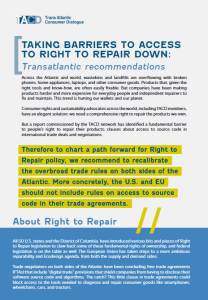 Modern products break down. But instead of repairing, too many people end up throwing things away. That is why initiatives are flourishing in Europe and in the U.S. to make it easier for everyone to repair products. Yet consumer groups across the Atlantic uncovered a new type of obstacle to the right to repair. What? ? Software restrictions, hidden behind “source code protection” rules in both U.S. and EU trade deals, make vital repair information off limits. Companies could use these clauses to keep exclusive control, leaving consumers and independent repairers out in the cold. The result: more e-waste, higher costs, and diminished rights.
Options exist. Policymakers can keep these digital barriers in place and risk even more products becoming unfixable and disposable. Or governments can rethink trade policies and stop blocking the flow of repair knowledge to consumers. Legislation in the EU and U.S. already shows how repair mandates boost sustainability and consumer freedom when designed fairly.
TACD recommends immediate action: trade agreement should not add blanket rules on software secrecy. Instead, governments should set up cooperation channels that protect legitimate business secrets without killing the right to repair. Countries must leave room for robust legislation, allowing consumers to get the tools, software, and information they need.
What’s next? TACD sees a clear path forward. Policymakers in Europe and the U.S. must champion repair-friendly trade and promote open frameworks where consumer rights and environmental priorities lead the way. This is the moment to ensure repair remains possible, affordable, and accessible to all.